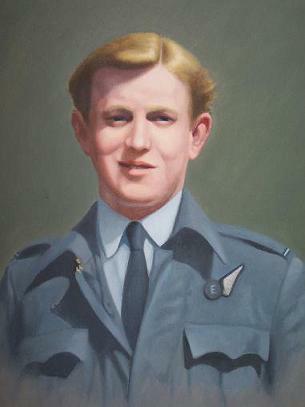
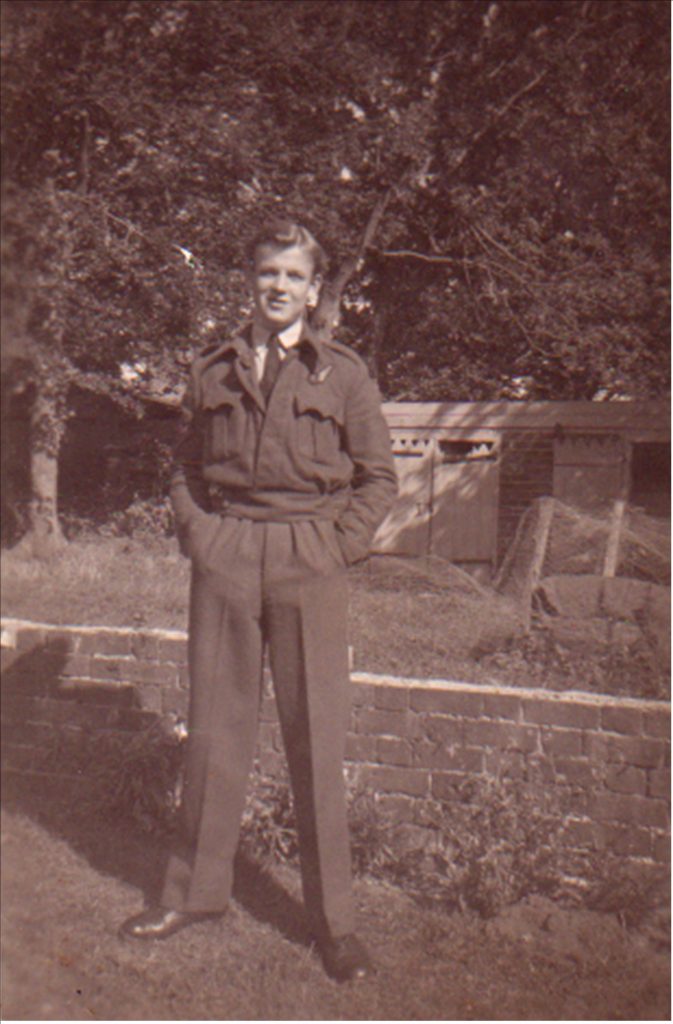
Christopher Witton Panton was a 19-year-old Lincolnshire flight engineer who was killed on the Nuremburg raid on 30/31 March 1944. It was Chris’s sacrifice that motivated his younger brothers, Harold and Fred Panton, to establish the Lincolnshire Aviation Heritage Centre. in his memory.
Many thanks to Andrew Panton for allowing us to share the story of his great uncle.
An account of the incident from the German side can be seen here.
P/O Christopher Witton Panton
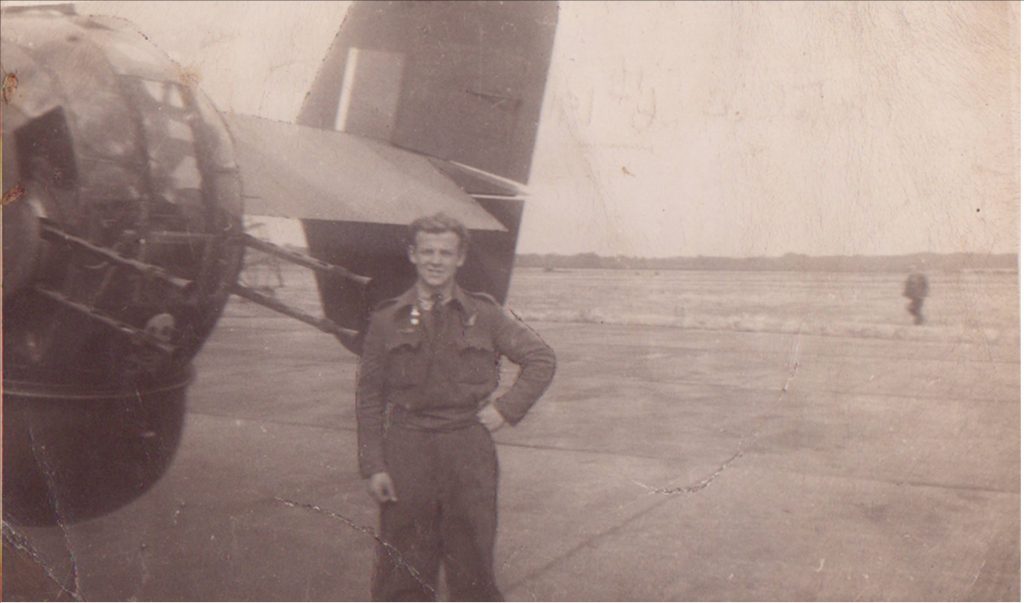
Christopher Panton was one of eight children of a gamekeeper and his wife. He joined the RAF in 1942 and trained as a Flight Engineer. He was posted to 433 Sqn Royal Canadian Air Force at RAF Skipton-on-Swale, 4 miles west of Thirsk in North Yorkshire. As the Canadians didn’t train flight engineers, it was the norm for the crew’s Flight Engineer to be British. The crew’s captain was an American citizen of Danish extraction Pilot Officer Christian Nielsen, known as “The Mad Dane”.
With the exception of the Mid-Upper Gunner, who was also British, the rest of the crew were Canadian. On one occasion the hydraulics failed on their Halifax just after a fully loaded take off, so the undercarriage and flaps could not retract. Chris Panton pumped furiously at the manual controls and pressure was regained just in time for the aircraft to clear an approaching hill. The Nuremburg Raid would be the crew’s 27th mission, agonisingly close to the 30 they had to achieve to complete their tour.
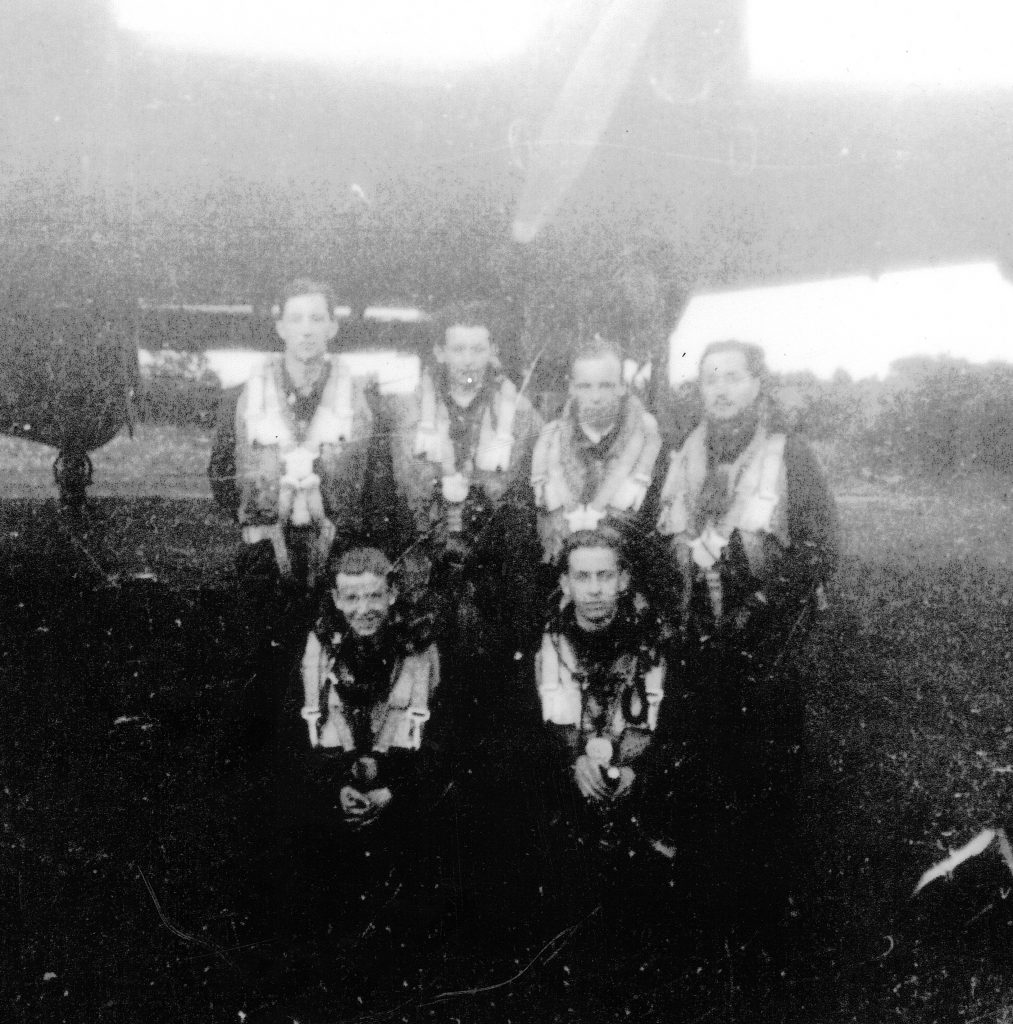
Taking off at 2149 hrs in their Halifax B.III [HX272 BM-N], the crew managed to survive the long outbound leg before turning south to head towards the target. At least 65 RAF aircraft had already been shot down by this time. Most of our heavy bombers did not have a ventral turret and the German night fighters used this to their advantage. They could attack from the bomber’s blind spot, using upward firing cannon called “Schrage Musik” to devastating effect.
The weapon had been in service for seven months and the RAF was still not fully aware of its existence. Bomber crews would see massive explosions around them whilst they flew in the bomber stream. Reports from air gunners of German night fighters stalking their prey from below had appeared as early as 1943 but had been discounted. A myth developed among RAF Bomber Command crews that “scarecrow shells” were encountered over Germany. This was thought to be Anti-Aircraft shells simulating an exploding four- engined bomber and designed to damage morale. Sadly, these were actually kills by Luftwaffe night fighters.
Chris Panton’s crew were preparing for their bombing run when cannon rounds screamed past the rear gun turret, setting number three engine ablaze. The attack had come from underneath the Halifax, a Junkers Ju 88 using its Schrage Musik. “Mad Dane” Chris Nielsen did all he could; he dived and corkscrewed in the hope that the rushing air might quell the fire, but as he did so the plane lurched into an uncontrollable fall. Nielsen gave the order to abandon the aircraft. The rear gunner bailed out and, as he fell clear, an explosion threw Nielsen and the Wireless Operator out of the side of the fuselage at 15,000 feet.
The rest of the crew, the Navigator, Bomb Aimer, Mid- Upper Gunner, a new pilot making his “second dickey” trip to gain experience, and the Flight Engineer Chris Panton, aged just 19, were still on board when it crashed 10 miles south-east of Bamberg, around 20 miles north of Nuremberg. The red cross on the map shows where they were shot down. They are buried side by side in Durnbach War Cemetery, 28 miles south of Munich, 120 miles south of Nuremburg. The three surviving crew members became POWs. There’s was the 77th out of 95 aircraft shot down that night.