George “Len” Pearce trained as a Royal Air Force Flight Engineer during the Second World War—but never flew operationally. His incredibly detailed memoires “Ad Astra “to the Stars” have been kindly shared by his daughter Christine Hawkins. The full document can be downloaded here.
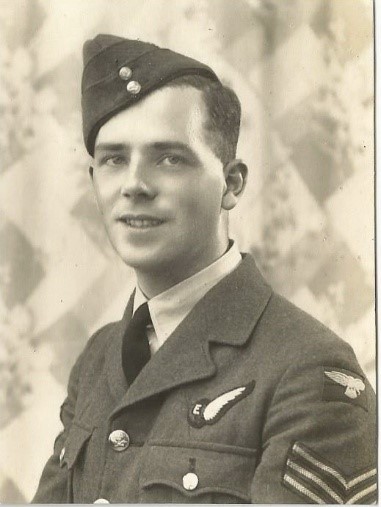
George Leonard “Len” Pearce was born in 1925 and grew up in Wimborne, where he attended the local grammar school and joined the Cadet Force. In later life, his wartime service was remembered as beginning in a small Dorset town but leading him into the nationwide training system of the Royal Air Force during the Second World War.
His interest in aviation began early. Wimborne’s summer visits from Sir Alan Cobham’s travelling “flying circus” brought aircraft displays, aerobatics, wing-walking and fly-pasts directly to local audiences, and these experiences formed part of the background to his wish to fly. In his own words, this was “what probably sparked Len’s interest in planes and flying.”
By the autumn of 1942, that early fascination had become a definite decision. Len and his friend John Loader volunteered for the RAF through the Air Training Corps towards the end of September that year. Looking back, he set his choice in the wider mood of the time, but also in something very personal: the urge to fly. As he put it, volunteering for the RAF was his answer to the “Desire to Fly”, and, reflecting on the advice that soldiers were never supposed to volunteer, he wrote, “I suppose this must be my excuse for ignoring the advice of ‘Old Soldiers’.”
The first formal step was a journey to Salisbury in October 1942 for medical examination and interview. Len’s description of that day captures both the thoroughness of wartime recruiting and his eye for detail. The candidates moved slowly from cubicle to cubicle while doctors and examiners carried out a complete inspection. He summed it up memorably: “Everything that these medics could think of, was peered at, poked, pressed and thumped.” The whole process was part of the RAF’s initial effort to determine whether a volunteer was fit to proceed further towards aircrew service.
A second summons followed about a fortnight later, taking him to Oxford in the second week of December for the Aircrew Selection Centre. He understood the significance of that journey clearly enough, describing it as “one more step along my chosen path toward flying with the Royal Air Force.” He went there knowing that his friend John Loader had already been selected for aircrew training, and he himself approached the next round of tests in the same spirit of anticipation. “So,” he wrote, “I happily set out, very early in the morning and once again in uniform.”
At Oxford, the medical was more searching still and directed specifically towards flying duties. Eyesight and colour vision were important, and lung capacity was tested by means of a mercury tube apparatus that demanded sustained pressure for a full minute. Len recorded how difficult he found it, but he also recorded the determination with which he approached it. “I did not give up and held on for the full minute,” he wrote, and that passage gives a vivid sense of the effort involved in simply qualifying to move forward. The same stage also involved aptitude tests, which he later recalled more favourably, remarking, “These I quite enjoyed.”
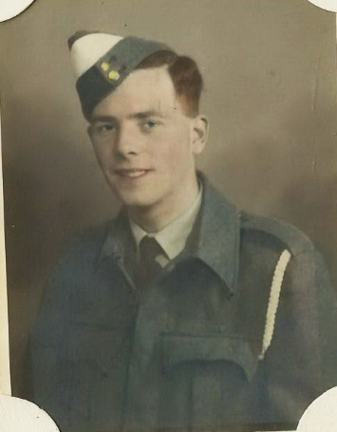
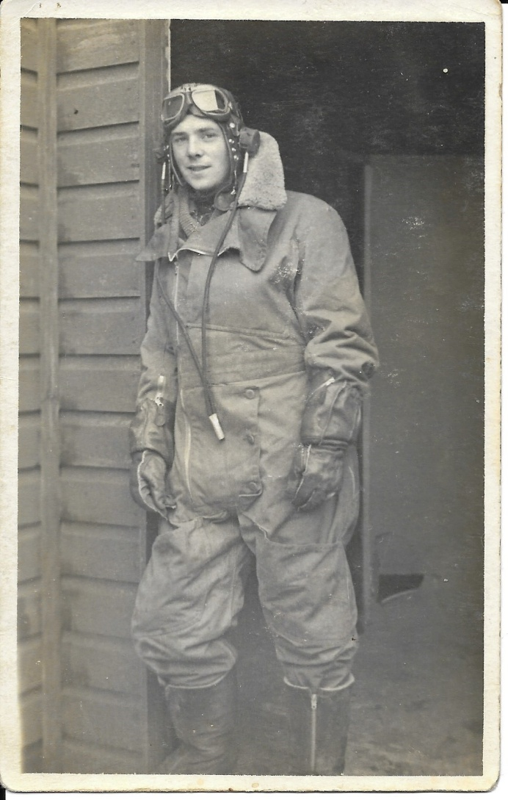
The broad course of Len’s wartime RAF life can be traced through the sequence of training and postings that followed. The narrative moves from volunteering to raw recruit apprentice airman and then to potential pilot, followed by No. 11 Elementary Flying Training School at Perth. At this point in his service, the direction of travel was plainly towards pilot training. The desire that had led him into the RAF was still intact, and the training system had carried him into the early stages of learning to fly.
From there, however, his service changed course. The subsequent stages of his career included Heaton Park, Babdown Farm and Locking, the last of these marked by the phrase “A change of direction.” This shift was not voluntary, but reflected a wider RAF policy at the time, when a surplus of trained pilots led to a further round of streaming into other aircrew roles. Thereafter his path took him through St Athan, Cosford, St Athan again, Melksham and Keevil. The account identifies this later phase not as continued pilot training but as the route by which he became a Flight Engineer.
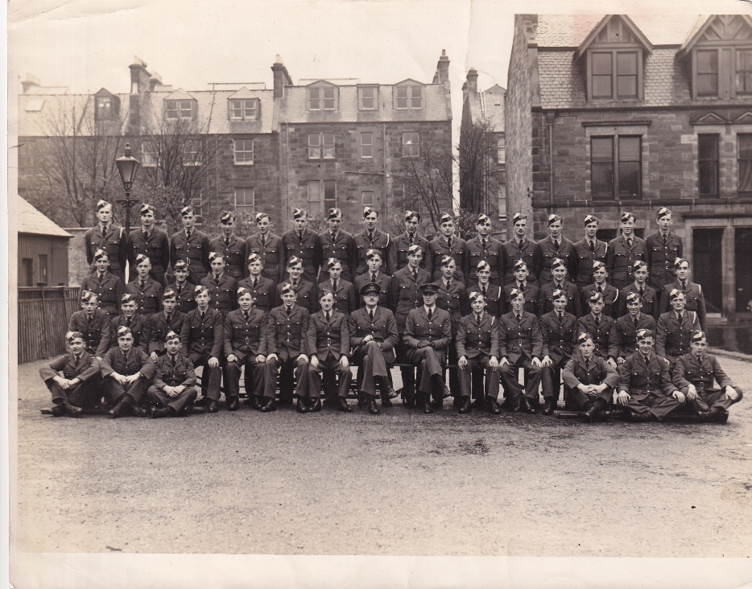
St Athan formed an important part of that training. The narrative identifies two separate St Athan stages in his development as a Flight Engineer. The first is headed “Common Construction” and, after a short break at Cosford, he returned to St Athan for a second phase headed “Type Training.” Although these stages completed his preparation for operational flying, the war ended before he could be posted to an active squadron, and as a result Len did not fly operationally.
After the war, Len returned to civilian work, first in insurance and later as a town planner. Yet the connection with RAF life did not end with demobilisation. He became an instructor with 1069 Air Training Corps in Wimborne and later went on to command that unit. He then moved to 149 Air Training Corps in Poole, where he remained for many years.